A New Way of Supporting Recovery
As we celebrate six months since the very first referral to SEEDS Wellbeing, it feels like the right moment to reflect on how this program came to life – and the impact it’s already having on people navigating injury, illness, and major life disruption.
SEEDS began with a simple but powerful intention: to help individuals feel more confident and more in control of their recovery. Recovery is rarely linear. It can be emotionally demanding, physically unpredictable, and deeply disruptive to identity, routine, and daily life. SEEDS was designed to meet people in that space – gently, practically, and with a focus on what they can influence.
But behind SEEDS sits a deeper set of questions. For those who have been following along since the founding of Uvida, you will recall that the creation of the business was sparked from several “what ifs”. Questions that challenged traditional models of rehabilitation and opened the door to a more holistic, person‑centred approach.
The Questions That Sparked SEEDS
What if injury or illness became an opportunity for transformation—not just restoration?
Instead of aiming to return people to a previous version of themselves, SEEDS explores how recovery can be a catalyst for growth, clarity, and renewed identity.
What if the most complex cases were met with short, tailored programs that prioritise exploration, reflection, planning, and aligned action—helping people move toward their vision of ideal health?
Rather than overwhelming people with long, intensive interventions, SEEDS offers structured, digestible steps that build momentum and confidence.
What ripple effect could that have—not only on recovery, but on confidence, wellbeing, and future trajectory?
When people feel capable and supported, they make different choices. They engage more deeply. They regain a sense of agency. These shifts matter.
And how might it benefit the systems and clinicians already working to support them?
SEEDS was designed to complement -not replace – existing care. By strengthening lifestyle foundations and psychosocial readiness, SEEDS helps other interventions land more effectively.
These questions became the backbone of the program.
From Veterans to Broader Recovery Pathways
SEEDS was originally created as a psychosocial rehabilitation activity for veterans—supporting identity, confidence, and wellbeing during periods of transition, recovery, and uncertainty.
But it quickly became clear that the challenges veterans face – disrupted routines, loss of structure, changes in identity, reduced social connection, and emotional strain – are also experienced by many others recovering from injury or illness.
Today, SEEDS is being used as an auxiliary support tool across:
- Workers’ compensation
- Life insurance
- Compulsory Third Party (CTP)
- General injury and illness recovery pathways
In all these settings, SEEDS provides a structured, supportive way for people to rebuild stability and confidence while navigating significant life disruption.
Why Lifestyle Health Matters
At its core, SEEDS focuses on four key lifestyle health factors that sit beneath both physical and psychosocial wellbeing:
- Social Connection
- Exercise and Physical Activity
- Diet and Nutrition
- Sleep
These pillars have been recognised as key lifestyle domains in the conceptual framework for lifestyle psychiatry and are behavioural antecedents that influence psychosocial injury risk and shape the length and complexity of physical recovery. When these foundations are strengthened, people feel more capable, more grounded, and more able to engage in their broader rehabilitation.
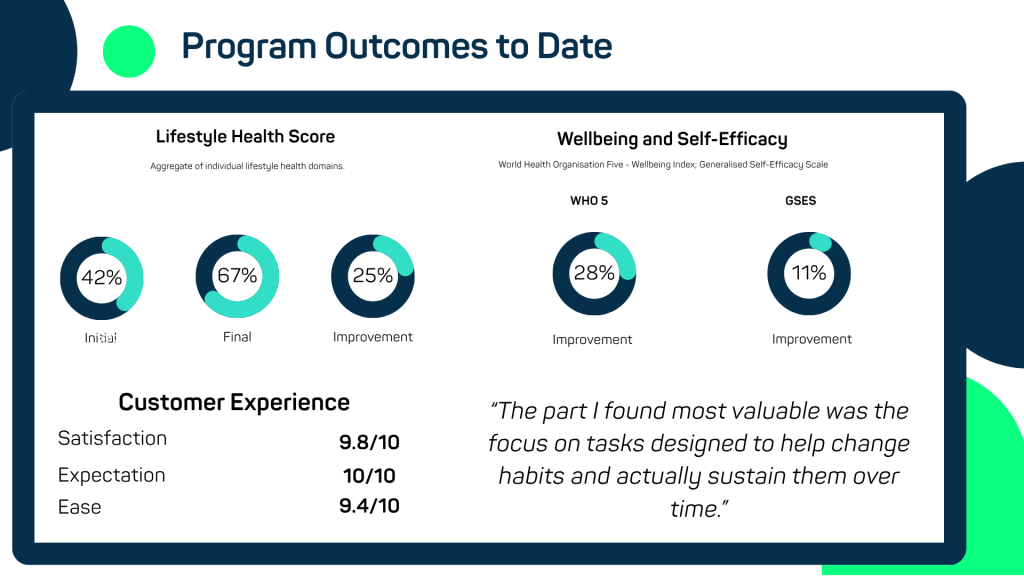
What We’ve Seen in the First Six Months
Across the first cohort of participants, SEEDS has helped people:
- Build routines that support their physical and mental health
- Understand their recovery in a more holistic, empowering way
- Reduce feelings of overwhelm and uncertainty
- Strengthen their confidence and sense of identity
- Experience small, meaningful wins that build momentum
- Reconnect with what matters to them
These outcomes reflect the heart of SEEDS: small, sustainable steps that create meaningful change.
There is certainly much more work to do on the program, and we have many ideas for how we can continue to improve and iterate on it to make it the best support it can be. But for now, we are happy to see that the positive early impact.