If you’ve ever felt overwhelmed by diet advice, you’re not alone. In my work with clients, I regularly see the same confusion: “There’s so much different advice online… how do I know what’s actually healthy?”
Between influencers, headlines, celebrity endorsements and glossy before‑and‑after photos, it’s easy to believe there must be one ideal way of eating, and that you just haven’t found it yet.
But here’s the good news: the evidence tells a very different, much more reassuring story.
A review by Katz & Meller (2014) examined the major dietary patterns promoted for health: low‑carb, low‑fat, vegetarian, vegan, Mediterranean, low‑glycaemic, Paleo and mixed balanced diets. Their conclusion was refreshingly clear:
“The fundamentals of virtually all eating patterns associated with meaningful evidence of health benefit overlap substantially.”
“A diet of minimally processed foods close to nature, predominantly plants, is decisively associated with health promotion and disease prevention.”
In other words, there is no single perfect diet, but there are consistent principles shared by the diets that support long‑term health.
And given the scale of the problem, these principles matter. Chronic diseases account for 80% of global non‑communicable disease deaths, with unhealthy diets a major contributor (WHO, 2025). In Australia alone, we lost 5.6 million years of healthy life in 2023 due to chronic disease burden (AIHW, 2024). Dietary risks are the third leading cause of disease burden nationally, behind tobacco and overweight/obesity.
So let’s cut through the noise.
What the healthiest diets have in common
Katz & Meller’s review compared the evidence behind the most popular dietary patterns. While each diet has its own philosophy, rules and branding, the research shows they share several core features:
1. Mostly plants
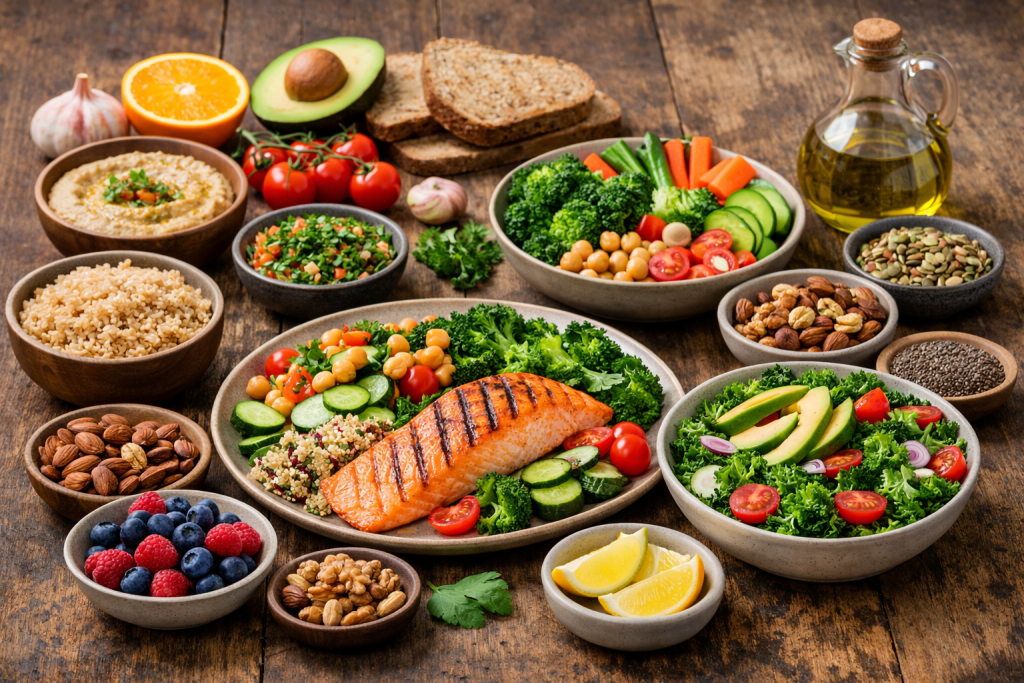
Vegetables, fruits, whole grains, legumes, nuts and seeds appear across every health‑promoting dietary pattern. Whether it’s Mediterranean, vegetarian, low‑glycaemic or mixed balanced, plants form the foundation.
2. Minimally processed foods
Highly processed foods, especially those high in refined starches, added sugars and sodium, consistently increase chronic disease risk. Diets that emphasise whole, minimally processed foods show the strongest benefits.
3. Healthy fats over harmful fats
Mediterranean diets highlight olive oil and nuts; plant‑based diets emphasise naturally low‑fat whole foods; low‑carb diets increasingly focus on unsaturated fats. The pattern is clear: quality matters more than quantity.
4. Carbohydrate quality matters
Low‑carb diets can be effective for short‑term weight loss, but the review notes that many benefits attributed to “carb restriction” can be achieved simply by choosing better carbohydrate sources – whole grains, legumes, vegetables and fruit.
5. Flexibility across cultures and contexts
Traditional Japanese diets, Mediterranean diets, plant‑forward Asian diets and Indigenous food systems all look different, yet they share the same health‑supportive principles. Culture shapes food choices, but the underlying patterns remain consistent.
A quick myth‑buster (because the internet is loud)
“Carbs are bad.”
Not true. The evidence shows that refined carbohydrates (white bread, sugary snacks, ultra‑processed foods) increase disease risk – not whole grains, legumes, fruits or vegetables. High‑fibre, plant‑rich diets consistently improve metabolic health.
“Superfoods fix everything.”
No single food can undo an overall poor diet. Health comes from dietary patterns – the everyday choices that add up over time.
“Everyone should eat the same way.”
Absolutely not. Katz & Meller emphasise that no diet is universally superior. Your health conditions, culture, preferences, budget, food access and lifestyle all shape what “healthy eating” looks like for you.
So… what is the best diet?
The best diet is the one that aligns with the evidence and works for your life.
From the research, that looks like:
- Plenty of vegetables and fruit
- Whole grains and legumes
- Nuts and seeds
- Healthy fats (like olive oil)
- Limited added sugars and refined starches
- Minimal ultra‑processed foods
- Flexibility to honour culture, enjoyment and accessibility
Where personalised support matters
Population‑level dietary patterns tell us what works on average. But individuals aren’t averages.
For someone living with diabetes, kidney disease, gastrointestinal conditions, food allergies or complex chronic illness, the “best diet” becomes more nuanced. This is where accredited dietitians play a crucial role. Tailoring evidence‑based principles to your medical needs, preferences and daily realities.
Final thought
There is no perfect diet…and that’s actually liberating.
It means you don’t need to chase trends, eliminate entire food groups or overhaul your life overnight. You can build a way of eating that supports your health, honours your culture, fits your budget and feels sustainable.
And if you’re feeling overwhelmed by conflicting advice, there are credible pathways for help in personalising these principles in a way that works for you – accredited dietitians, certified nutritionists and Lifestyle Medicine practitioners.
Principal Health & Recovery Partner | Exercise Physiologist