Not All Movement Is Equal: What 73,000 Fitness Trackers Taught Us About Exercise Intensity
What if one minute of genuinely hard effort did as much for your health as nine minutes of moderate exercise?
That's the headline finding from one of the most significant physical activity studies published this year — and it has real implications for how we think about movement, especially for people who feel they don't have time to exercise.
The study, in plain terms
For decades, physical activity guidelines have been built on studies that asked people to remember how much they exercised. The problem? We're unreliable narrators of our own lives. We forget the walk to the shops, round the "20-ish minutes" up to 30, and misjudge how hard we were actually working.
A 2025 study published in Nature Communications took a different approach. Researchers analysed data from over 73,000 adults who wore research-grade wrist trackers, then followed their health outcomes — heart disease, type 2 diabetes, cancer and mortality — for an average of eight years. No memory required: the devices captured every movement, at every intensity, in 10-second slices.
It's the first large-scale study to objectively measure how different exercise intensities stack up against each other. And the results challenge the rulebook.
Finding one: vigorous effort punches far above its weight
The traditional assumption — baked into official guidelines and most fitness watches — is that one minute of vigorous activity equals about two minutes of moderate activity.
This study found the true ratio may be closer to one to four, and for some health outcomes as high as one to nine.
In practical terms: a few minutes of genuinely breathless effort — hill sprints on your morning walk, fast stair climbs, a hard interval on the bike — may deliver benefits that would otherwise take a much longer moderate session to achieve. For time-poor people, that's not a shortcut gimmick. It's one of the most efficient health strategies the evidence currently supports.
This is also where the concept of "exercise snacks" comes in — short bouts of higher-intensity movement woven into an ordinary day. The science increasingly suggests these small, sharp doses matter more than we thought.
Finding two: light activity isn't the loophole we hoped
The same study delivered a humbler message about light activity. Pottering, slow strolling and general moving-about — while still far better than sitting — showed a much weaker relationship with long-term health outcomes. By the study's estimates, it took roughly 53 minutes of light activity to equal one minute of vigorous effort for mortality risk.
Light movement still matters: it breaks up sedentary time and keeps joints, circulation and routine alive. But if your activity is entirely incidental and low-intensity, this research suggests you may be leaving most of the benefit on the table.
What this doesn't mean
Here's where honest science matters more than a good headline.
This was an observational study — it shows powerful associations, not guaranteed cause and effect. Its participants were adults aged 40–79 without prior diagnoses of the conditions studied. And crucially, vigorous exercise isn't appropriate for everyone by default: for some people with cardiovascular conditions, recent illness or other health considerations, high-intensity effort needs proper screening and a structured progression first.
That's precisely the gap an Exercise Physiologist fills. Exercise Physiology is the allied health discipline of assessing an individual's health status and prescribing exercise the way medicine prescribes treatment — the right type, dose and intensity for your body, history and goals. "Go harder" is not advice; "here's how you get to harder, safely, from where you are today" is.
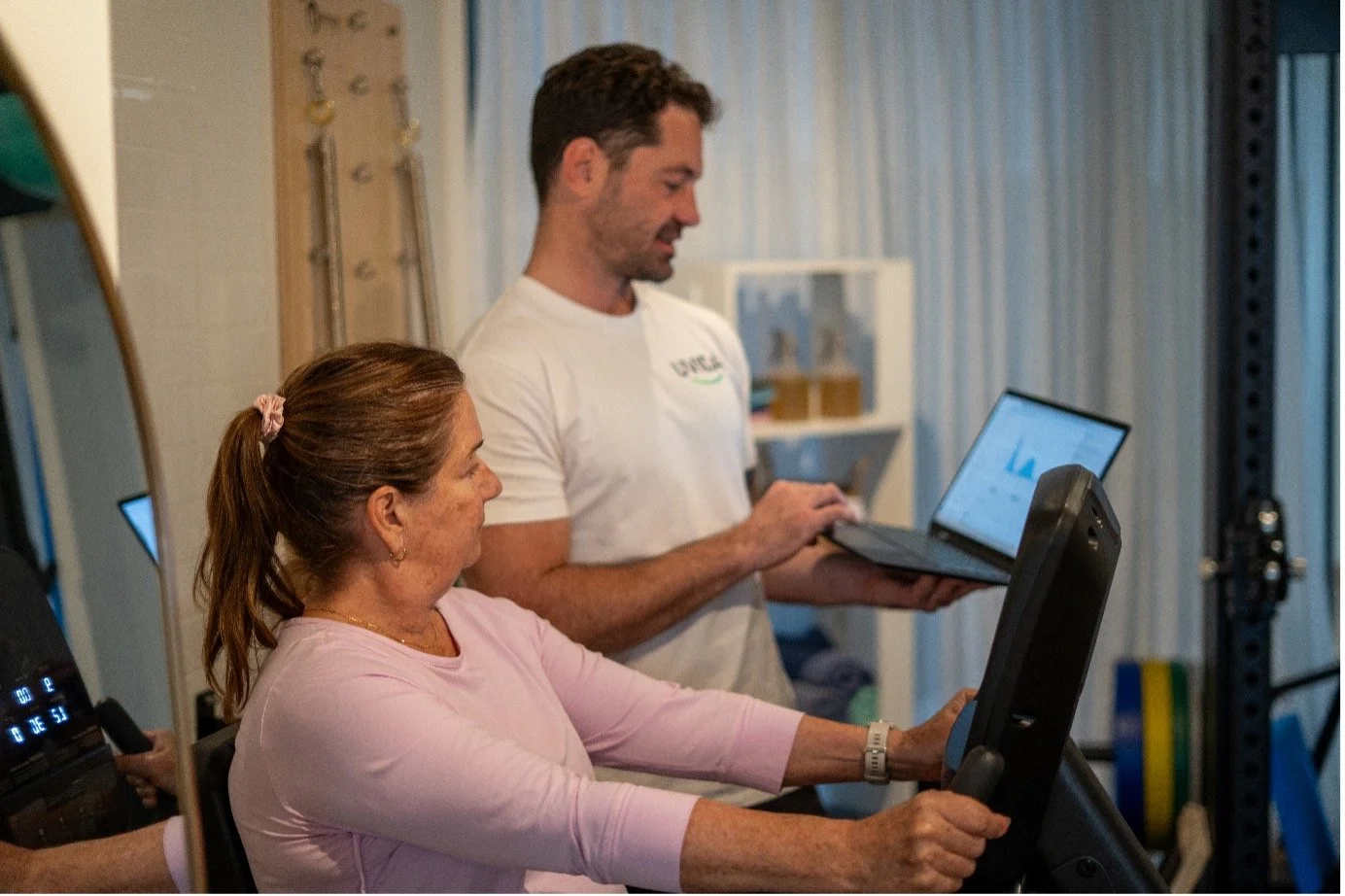
With the right guidance, vigorous activity becomes both safe and transformative — Uvida EPs can help you get there.
The Lifestyle Medicine takeaway
At Uvida, this study reinforces something at the heart of Lifestyle Medicine: movement is powerful medicine, and how you move matters as much as how much.
Three practical takeaways from our team:
Add intensity before you add time. If you're already moving, a few minutes of harder effort may return more than another half hour of the same.
Think in snacks, not sessions. Two fast stair climbs a day is a real intervention, not a consolation prize.
Get the dose right for you. If you're managing a health condition, an injury, or you're returning to exercise after time away, work with an Exercise Physiologist to find your safe starting intensity and build from there.
The future of physical activity guidance is becoming more personal, more objective, and more precise. That's a future we're built for.
Uvida's ESSA-accredited Exercise Physiologists deliver personalised, evidence-based Lifestyle Medicine programs at our Coolangatta centre and via telehealth — accessible through a range of funding pathways.
Matt Worland
Principal Health & Recovery Partner | Exercise Physiologist